



Here’s the truth no one tells you when you say yes to being a bridesmaid: the dress that fits perfectly straight out of the bag almost doesn’t exist. And that’s not a flaw — it’s a feature.
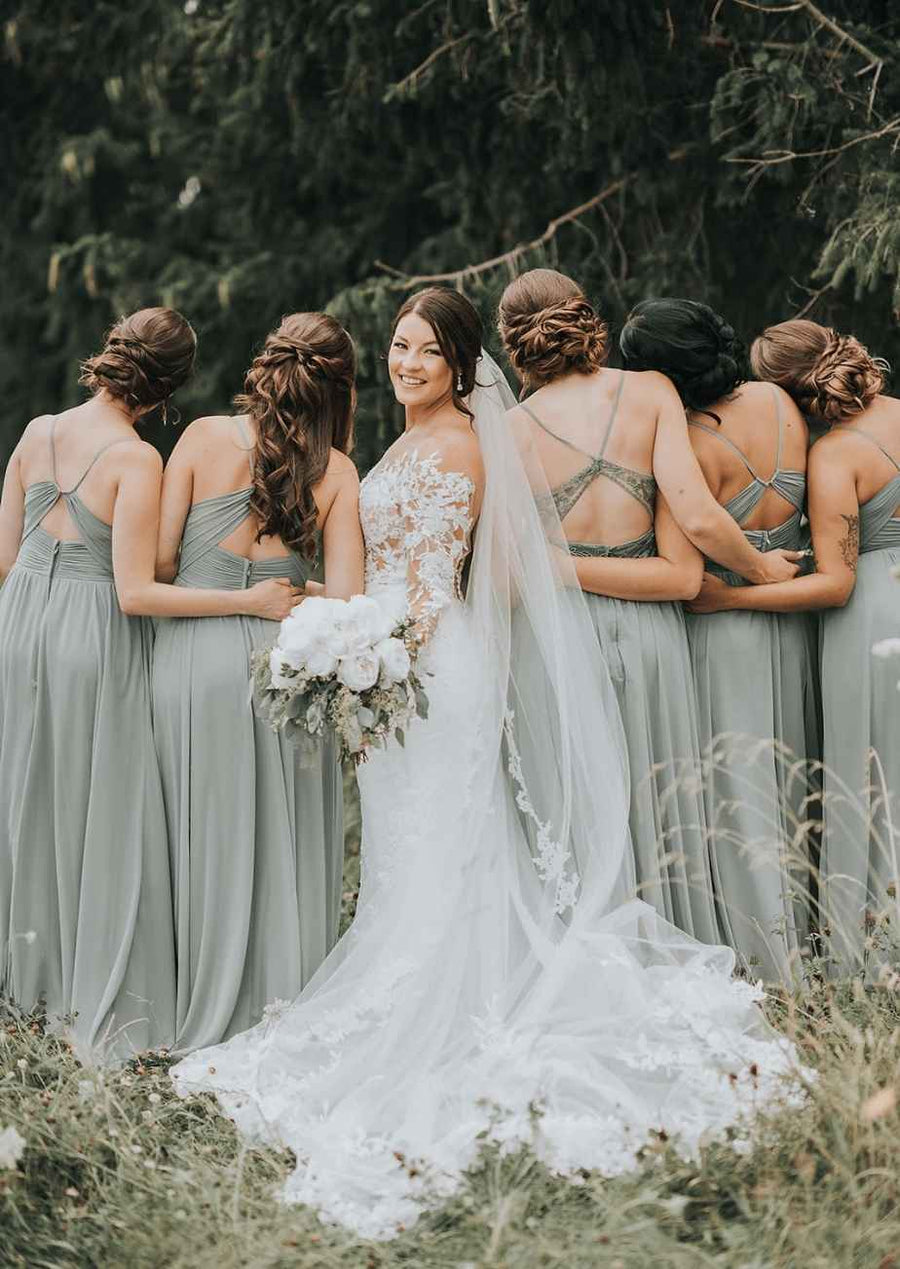
Bridesmaid dresses are made-to-order in standard sizes designed to flatter a wide range of heights and bodies. A few small alterations are what take a beautiful dress and make it look like it was made specifically for you. It’s the secret every bridesmaid in those Pinterest-worthy wedding photos already knows: the dress fits because it was tailored to fit, not because they got lucky off the rack.
Most people are used to ready-to-wear sizing — pull a size 8 off the rack, walk out the door. So when alterations enter the picture, it can feel like extra work or extra cost. We get it. But here’s how to think about it: alterations are the difference between a dress that’s fine and one that makes you stop and stare in the mirror. They’re a finishing touch, not a fix.
And here’s the good news: there are smart choices you can make at the time of ordering that dramatically reduce the alterations you’ll need — sometimes by half. We’ll walk you through all of it.
This guide covers every step — from your first fitting to the morning of the wedding — so you’ll feel confident, comfortable, and absolutely stunning when you walk down that aisle. Let’s go.
In This Guide
- Will my Kennedy Blue dress need alterations?
- The most common bridesmaid dress alterations
- The smartest way to reduce alterations: FlexiForm dresses
- The bridesmaid dress alteration timeline
- What to bring to your fitting (the heel-height rule)
- How to find a great seamstress
- Pregnant bridesmaid? Read this
- More smart choices to make alterations easier
- Frequently asked questions
1) Will My Kennedy Blue Dress Need Alterations?

Most likely, yes — and that’s a good thing. Even if your measurements perfectly match our size chart, the way a dress sits on your body depends on shoulder slope, torso length, hip-to-waist ratio, and a dozen other things no size chart can capture. That’s why almost every made-to-order bridesmaid dress benefits from a few small adjustments to make the fit truly yours.
Good news: Kennedy Blue dresses are designed with sizing closer to standard ready-to-wear, so most bridesmaids need fewer alterations than they would with traditional bridal brands. And our FlexiForm collection is specifically engineered to reduce alterations even further — more on that in section 3.
2) The Most Common Bridesmaid Dress Alterations
Here are the four alterations you’re most likely to encounter, and what each one does:
Hemming the Length

The most common alteration of all. Bridesmaid dresses are cut at one length to fit a wide range of heights, which means most bridesmaids will want to shorten the dress to match their height plus their heel choice. A skilled seamstress can pin the hem at multiple lengths so you can compare and pick what feels right — slightly above the floor, just grazing it, or a soft puddle.
Taking In the Bust, Waist, or Hips
This is the alteration that creates that “made for me” look. If your measurements span more than one size (say, a size 10 bust and a size 12 waist), you’ll order the larger size — and a tailor can take in the smaller area for a custom fit. This alteration is also the most variable in cost, since it depends on how much fabric needs to come in and what the dress is made of.
Most bridesmaid dresses can be taken in up to two sizes without affecting the design.
Shortening the Straps
Straps are intentionally designed a little long to fit different torso lengths. A 5-minute strap adjustment keeps them sitting exactly where you want them all night — no tugging, no slipping during photos.
Adding a Bustle
For dresses with a small train, your seamstress can add a bustle (essentially a hidden way to lift the train up) so you can dance and move freely at the reception. This is rare for bridesmaid dresses but possible if your dress has any train.
3) The Smartest Way to Reduce Alterations: FlexiForm Dresses
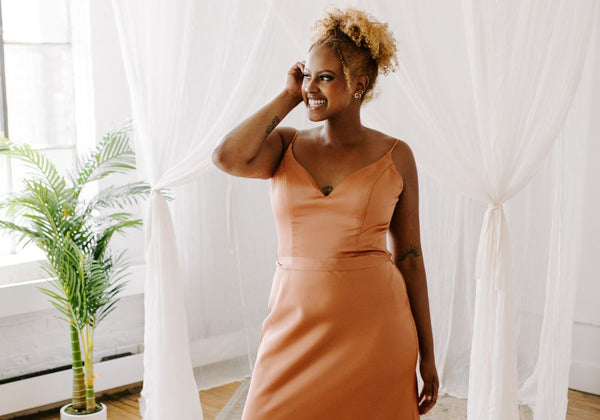
Here’s the move that changes everything: Kennedy Blue’s FlexiForm collection.
FlexiForm dresses are built with an adjustable bodice that flexes about a full size up or down. That means the bust, waist, and back of the dress adapt to your body — without a tailor, without an appointment, without a single stitch of alteration work.
Why This Matters
The bust and waist alterations are the trickiest, most variable, and most expensive part of any bridesmaid dress alteration. They require multiple fittings, careful work on delicate fabric, and a seamstress who knows what she’s doing. Hemming is easy. Taking in a bodice is not.
FlexiForm eliminates most of that work entirely. The bodice is designed to adjust to YOU, so the dress fits beautifully whether your measurements line up perfectly with the size chart or not. That’s a massive advantage if:
- Your bust and waist are different sizes on the chart
- You’re between sizes and don’t know which way to size
- Your weight tends to fluctuate (we’ve all been there)
- You’re early in pregnancy or postpartum
- You bought your dress months in advance and your body changes before the wedding
How Well Does It Actually Fit?
Bridesmaids who’ve worn both consistently tell us FlexiForm fits about twice as well as a standard bridesmaid dress. It’s the difference between a dress that needs a tailor’s help to feel right and one that already feels right when you put it on. The adjustable bodice molds to your shape — so you get that custom-fit look without paying for it twice.
Most FlexiForm bridesmaids only need a hem (and sometimes not even that). That’s it. One quick visit to the seamstress, and you’re wedding-ready.
If you want the easiest possible alteration experience, this is the answer.
Browse FlexiForm Adjustable Bridesmaid Dresses →
4) The Bridesmaid Dress Alteration Timeline

Don’t wait until the last minute. Seamstresses book up fast — especially during peak wedding season (April through October). Here’s the timeline that works best:
8 Weeks Before the Wedding
Call your seamstress to book your first fitting. Tell them the wedding date so they can plan the turnaround. During peak season (April–October), you may need to call even earlier — 10 to 12 weeks out — to get on the calendar.
4 to 6 Weeks Before the Wedding
First fitting. This is the sweet spot — far enough out that there’s time for adjustments, close enough that your measurements are still accurate. Bring everything on the checklist below.
2 Weeks Before the Wedding
Final fitting and pickup. Try the dress on with all your wedding-day pieces: shoes, undergarments, shapewear. This is your last chance to make small adjustments before the big day.
The Week of the Wedding
Try the dress on at home one more time. Sit in it. Walk around. Make sure everything still feels right. The morning of the wedding should never be the first time you zip it up.
5) What to Bring to Your Fitting (The Heel-Height Rule)
Showing up prepared makes the difference between a perfect fit and a “we’ll have to come back” appointment. Your checklist:
- ✅ Your dress. Obviously.
- ✅ The exact shoes you’ll wear on the wedding day. Or shoes with the same heel height. This is the single most important thing on this list. Different heels can change where the dress falls on the floor by several inches. The same dress with a 4″ heel vs. flats will look completely different. Pick your wedding shoes before your first fitting, and bring those exact heels to the seamstress.
- ✅ The undergarments and shapewear you’ll wear. Bra, slip, shapewear — anything that changes how the dress sits on your body.
- ✅ Inspiration photos. If you’ve decided you want a “puddle hem” or “just grazing the floor,” bring photos so your seamstress can match the look.
- ✅ The wedding date. Your seamstress will plan around it.
- ✅ Questions. Fittings are a conversation. If you’re stuck between two lengths, ask the seamstress to pin both and compare.
💡 Insider tip: Show up with your hair pulled back the way you’ll wear it on the day, and a touch of makeup. You’ll be looking at yourself in the mirror a lot, and a little glam helps you visualize the full wedding-day look.
6) How to Find a Great Seamstress

A skilled seamstress is the difference between an okay alteration and a perfect one. Here’s how to find one:
Where to Look
- Google or Yelp — search “bridal alterations near me” or “formalwear tailor”
- Thumbtack — get quotes from multiple tailors at once
- Local bridal shops — most offer alterations, even for dresses bought elsewhere
- Friends who’ve been in weddings — personal referrals are usually the best
What to Look For
- Experience specifically with formalwear — bridesmaid dresses use delicate fabrics (chiffon, satin, crepe) that need an experienced hand
- Strong reviews mentioning wedding or bridal alterations
- A clear timeline before you commit
- Willingness to do a second fitting if needed
What to Skip
- “Quick-turn” shops that don’t take real measurements
- Friends with a home sewing machine (well-meaning, but formal fabrics are unforgiving)
- Anyone who can’t tell you exactly how long the alterations will take
7) Pregnant Bridesmaid? Read This

If you’re pregnant or postpartum during the wedding, alterations work a little differently — and Kennedy Blue has options designed specifically for you.
The single best choice: FlexiForm.
Because FlexiForm dresses adjust about a full size up or down on the bodice, they’re tailor-made for changing bodies. Whether you’re early in pregnancy, will be growing into the wedding, or are postpartum and unsure of your final size, a FlexiForm dress flexes with you. No anxious second fittings. No guessing what size to order. The dress meets you where you are.
Other smart picks for pregnant bridesmaids:
- Empire-waist styles — sit above the belly and skim over a bump
- Flowing silhouettes — chiffon or A-line cuts that don’t constrict
- Our Maternity collection — designed specifically for expecting bridesmaids
Browse Maternity Bridesmaid Dresses →
Quick timing tip: Plan to be roughly the size you were at five months pregnant when you order, and take measurements around that time. If the wedding is shortly after your due date, wait to schedule final alterations until after delivery — your body changes a lot in the postpartum weeks.
8) More Smart Choices to Make Alterations Easier

A few simple decisions when you order can dramatically reduce the time and money you spend on alterations:
Choose FlexiForm If You Can
If reducing alterations is your top priority, this is the answer. The adjustable bodice handles the trickiest, most expensive alterations on its own, leaving you with (at most) a quick hem.
Try the Dress On at Home Before You Order
Our Try-at-Home program lets you try our top-selling dresses in your own home for just $10 per dress. Seeing how it actually fits before ordering means fewer surprises later — and fewer alterations needed when the real one arrives.
Pick Adjustable Strap Styles
Dresses with adjustable straps eliminate the need for a strap alteration entirely. Just adjust them to your body the day of.
Browse adjustable strap dresses →
Go With a Flattering, Forgiving Silhouette
A-line styles are the most universally flattering and require the fewest alterations. Empire waists, wrap fronts, and flowing chiffon all minimize the need for major adjustments.
Order From the Right Size
If your measurements span two sizes, always order the larger one. It’s easier (and less expensive) for a seamstress to take a dress in than to let it out.
Consider Platinum If You Want a Custom Length
For bridesmaids with very specific length needs, our Platinum collection offers custom length at no extra charge — you select your height range at checkout and the dress is built to that length. Just keep in mind: because Platinum dresses are made to your specific measurements, they can’t be returned, so this is best for bridesmaids confident in their measurements who want a length-perfect dress straight out of the box.
9) Frequently Asked Questions
How many sizes can a bridesmaid dress be taken in?
Most bridesmaid dresses can be taken in up to two sizes without affecting the design. Letting a dress out is more limited — it depends on the seam allowance built into the dress.
How long do bridesmaid dress alterations take?
Most simple alterations (hem, straps) take 1 to 2 weeks. More complex alterations (bust, waist, multiple changes) can take 2 to 4 weeks. Plan for at least one fitting plus a final pickup.
Can I alter the dress myself?
We recommend against it for any major alterations. Bridesmaid fabrics like chiffon and crepe are unforgiving and require special techniques. A small mistake can be hard or impossible to undo. For something as important as your wedding-day look, a professional seamstress is worth every penny.
What if I gain or lose weight before the wedding?
Most seamstresses can accommodate small adjustments close to the wedding date. If your size tends to fluctuate, choose a FlexiForm dress — the adjustable bodice handles a full size of change on its own, so you don’t need to worry about last-minute alterations.
Should I get my dress steamed before the wedding?
Yes. After alterations, a professional steam or press helps the dress hang the way it was designed to. Most seamstresses or dry cleaners offer this for a small fee.
The Bottom Line
Alterations aren’t a tax. They’re the finishing touch that takes your dress from beautiful to absolutely incredible. Plan ahead, find a great seamstress, bring the right shoes, and enjoy the process — because the moment you put on that perfectly tailored dress on the wedding day, you’re going to feel like a million bucks.
And if you want the easiest possible path? Choose a FlexiForm dress. The adjustable bodice does most of the alteration work for you — so you can spend less time at fittings and more time celebrating.


unterschied viagra sildenafil viagra connect sildenafil diabetes tipo 2
This is really helpful. One of my biggest goals in helping my girls choose their dresses is to make sure they are comfortable and feel like the dress flatters them, so the tips are great. Love that this article also targets saving money!
This was so incredibly helpful! I had instinctively wanted my girls in shape flattering dresses to begin with, and now I’m glad that that’s the direction I’m going in!
Love how helpful these blogs are! And how they really target saving you money on alterations in the end!
SO helpful! I’m in a wedding in a couple of months as the maid of honor and this was a great article to read.
This was so helpful!!! I’m a bridesmaid for one of my friends wedding and I’ve never been one before, I learned so much from this!